Your healthcare provider may suggest some lifestyle changes to help control your IBS. Changing your diet and managing stress are 2 of the most important changes. Follow your healthcare provider’s instructions. Try some of the advice below.
Change your diet
Your diet may be an important cause of IBS symptoms. You may want to try the following:
-
Pay attention to what foods bother you, and stay away from them. For example, dairy products are hard for some people to digest. Lactose-free dairy products may be better for your symptoms.
-
Don't eat high FODMAP foods. Common foods that can cause symptoms have carbohydrates called FODMAPs. Your body can't digest these well. High FODMAP foods include some fruits, such as apples, vegetables, such as cabbage, and some dairy. They also include certain sweeteners, such as high-fructose corn syrup, sorbitol, and xylitol. Many people find that eating a diet low in FODMAPs can ease symptoms. Talk with your healthcare provider about a low FODMAP diet.
-
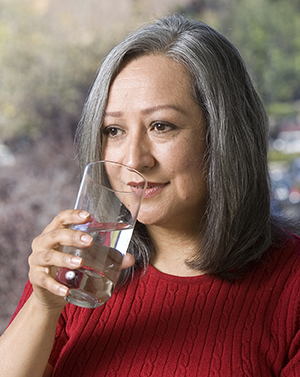
Drink 6 to 8 glasses of water a day.
-
Don't have caffeine or tobacco. These can affect how your digestive tract works.
-
Don't drink alcohol. It can irritate your digestive tract. It can make your symptoms worse.
-
Eat more fiber if constipation is a problem. Fiber makes the stool softer. That makes it easier to pass through the colon.
-
Eat more fiber if diarrhea is a problem. Fiber also helps to bind water. This can help to firm up loose stool.
Reduce stress
Learn how to manage stress if stress or anxiety makes your IBS symptoms worse. Managing stress may help you feel better. Try these tips:
-
Find out what causes stress in your life.
-
Learn new ways to cope with them. Mindfulness, meditation, and yoga may help.
-
Regular exercise is a great way to ease stress. It can also help ease constipation. For adults, the CDC recommends 150 minutes of moderate activity each week. Or you can get 75 minutes of vigorous activity each week. It also advises muscle-strengthening activities 2 days a week. If this sounds like a lot of time, the CDC suggests breaking physical activity into 10-minute blocks. You can spread those out over a week. Developing a schedule that works for you is the key to a successful exercise program.
Featured in
Online Medical Reviewer: Dozier, Tennille, RN, BSN, RDMS
Online Medical Reviewer: Image reviewed by StayWell art team.
Online Medical Reviewer: MMI board-certified, academically affiliated clinician
Date Last Reviewed: 04/01/2024
© 2000-2026 The StayWell Company, LLC. All rights reserved. This information is not intended as a substitute for professional medical care. Always follow your healthcare professional's instructions.
Learn More About Health Services at PIH Health
Expert care for every stage of life. Explore the comprehensive services offered at PIH Health.
Explore Services
Get Health Tips & Updates
Sign up for helpful health information, wellness tips and news from PIH Health, delivered straight to your inbox.
SubscribeRelated Articles
Ileostomy: Caring for Your Stoma
You need to take care of your stoma and the skin around it (peristomal skin). That means keeping the stoma and the skin clean. It also means protecting the skin from moisture and contact with stool. This helps prevent skin problems and odor.
Colostomy: Adjusting to Your Body
Getting used to a colostomy may take time. Learning to care for it and the changes in your body can be tough. But you're still the same person. And you can do many of the same things you've always enjoyed. Read on for tips to help you adjust to having a colostomy.
Gastrostomy Feeding Tube Care: Flushing
Learn how to keep your gastrostomy tube from getting clogged by flushing it with warm water after each feeding and before and after giving any medicines.
Colostomy: Changing Your Pouch
Your healthcare provider gave you a stoma (new opening for stool to pass from the body) during surgery. Stool starts to pass from the stoma soon after surgery. That means you'll need to learn how to change your pouch before you go home.

Personalized Care Starts with the Right Provider
Search by specialty, location, and more.
Find A Doctor
Make an Appointment
Your health can't always wait. Schedule an appointment with a PIH Health provider.
Schedule an Appointment
Find a PIH Health Urgent Care Location
Need care today?. Find the nearest PIH Health Urgent Care location.
Find Urgent Care