Most UTIs are caused by bacteria. But they may also be caused by viruses or fungi. Bacteria from the bowel are the most common source of infection. An infection may be more likely due to any of these:
- Having sex. During sex, bacteria can go from the penis, vagina, or rectum into the urethra.
- Bacteria outside the rectum getting into the urethra. Bacteria on the skin outside the rectum may go into the urethra. This is more common in people who were assigned female at birth. That's because, for them, the rectum and urethra are closer to each other than in people who were assigned male at birth. Wiping from front to back after using the toilet can help prevent germs from getting to the urethra. So can keeping the area clean.
- Blocked urine flow through the urinary tract. If urine sits too long, germs may start to grow out of control.
- A new sex partner within the last year.
- A history of recurrent UTIs and antibiotic use.
- Use of spermicide and diaphragm.
Parts of the urinary tract
The infection can occur in any part of the urinary tract.
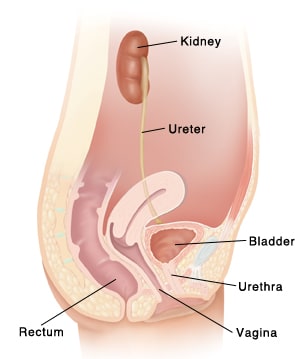
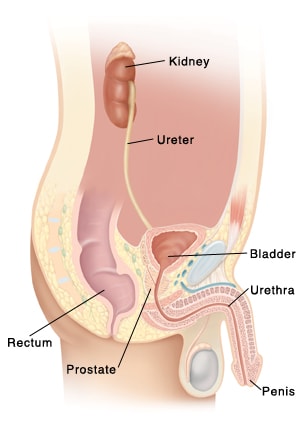
- The kidneys. These organs filter blood. They remove wastes and extra water to make urine.
- The ureters. These tubes carry urine from the kidneys to the bladder.
- The bladder. This holds urine until you're ready to pee.
- The urethra. This tube carries urine from the bladder out of the body. It's shorter in people who were assigned female at birth. So, for them, bacteria can move through it more easily. The urethra is longer in people who were assigned male at birth. So a UTI is less likely to reach the bladder or kidneys for them.
Online Medical Reviewer: Chris Southard RN
Online Medical Reviewer: Melinda Murray Ratini DO
Online Medical Reviewer: Rita Sather RN
Date Last Reviewed: 03/01/2024
© 2000-2026 The StayWell Company, LLC. All rights reserved. This information is not intended as a substitute for professional medical care. Always follow your healthcare professional's instructions.
Learn More About Health Services at PIH Health
Expert care for every stage of life. Explore the comprehensive services offered at PIH Health.
Explore Services
Get Health Tips & Updates
Sign up for helpful health information, wellness tips and news from PIH Health, delivered straight to your inbox.
SubscribeRelated Articles
Understanding Bladder Stones
Bladder stones are small deposits of crystals made from minerals and proteins that form in the urine. They may form when a small amount of urine stays in your bladder after urinating.
Discharge Instructions: Caring for Your Indwelling Urinary Catheter
You have been discharged with an indwelling urinary catheter (also called a Foley catheter). A catheter is a thin, flexible tube. An indwelling urinary catheter has two parts. These instructions will help you care for your catheter and prevent infection.
Discharge Instructions: Caring for Your Suprapubic Catheter
You are going home with a suprapubic catheter in place. Follow these steps to care for your catheter at home.
Priapism
Priapism is an erection that lasts more than 4 hours without sexual stimulation. Learn more about this condition.

Personalized Care Starts with the Right Provider
Search by specialty, location, and more.
Find A Doctor
Make an Appointment
Your health can't always wait. Schedule an appointment with a PIH Health provider.
Schedule an Appointment
Find a PIH Health Urgent Care Location
Need care today?. Find the nearest PIH Health Urgent Care location.
Find Urgent Care