People who have irritable bowel syndrome (IBS) have digestive tracts that react abnormally to certain substances or to stress. This leads to symptoms like cramps, gas, bloating, pain, constipation, and diarrhea. IBS is sometimes called "spastic colon." It is a common health problem. It is not a disease. But rather it's a group of symptoms that happen together.
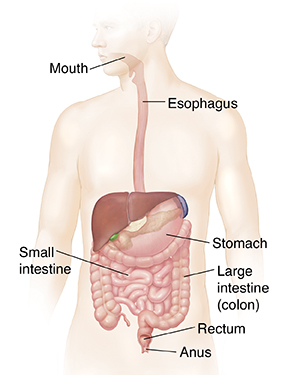
IBS is a motility problem
The muscle movement that passes food through the digestive tract (especially the colon) is called motility. When you have IBS, this movement is disrupted. Motility may speed up, slow down, and become irregular. If stool passes too quickly through the colon, not enough water is absorbed from it. You may have loose, watery stools (diarrhea). If stool passes through the colon too slowly, too much water is absorbed and the stool becomes hard and dry. You may then have constipation. Also, stool and gas may back up. This can cause painful pressure and cramping.
In part, IBS is also a problem of increased sensation. Sensations in the digestive tract may set off pain in IBS. They would not do so in someone without IBS.
No single test can diagnose IBS. Your healthcare provider will ask about your symptoms. You may also have blood, stool, or radiologic tests. You may even need a colonoscopy. These tests are done mainly to rule out other concerns.
What causes IBS?
Lots of research has been done on IBS. But the cause is still not fully known. Some of the possible factors are:
-
Smoking, eating certain foods, drinking alcohol, or caffeinated drinks can cause, or "trigger," symptoms of IBS.
-
IBS may be caused by a problem with the nerves or muscles in your digestive tract.
-
Some evidence suggests that certain bacteria found after a severe gastrointestinal infection in the small intestine and colon may cause IBS.
-
Stress and anxiety tend to make the symptoms of IBS worse. But it is not believed to be the primary cause.
What you can do
Medicine can’t cure IBS, but it may help manage the symptoms. It may help your digestive tract work better. Your healthcare provider may prescribe 1 or more medicines for you. Some medicines are over-the-counter and your provider can discuss their use with you.
Your healthcare provider may also suggest some lifestyle changes to help control your IBS. You may have to change your diet and learn to better manage your stress. Yoga and mindfulness have been shown to ease IBS symptoms. Dietary changes can also be helpful. If diet changes are advised, talk with a dietitian. They can help you keep a healthy nutritional balance in your food intake.
Featured in
Online Medical Reviewer: Jen Lehrer MD
Online Medical Reviewer: Rita Sather RN
Online Medical Reviewer: Robyn Zercher FNP
Date Last Reviewed: 03/01/2025
© 2000-2026 The StayWell Company, LLC. All rights reserved. This information is not intended as a substitute for professional medical care. Always follow your healthcare professional's instructions.
Learn More About Health Services at PIH Health
Expert care for every stage of life. Explore the comprehensive services offered at PIH Health.
Explore Services
Get Health Tips & Updates
Sign up for helpful health information, wellness tips and news from PIH Health, delivered straight to your inbox.
SubscribeRelated Articles
Irritable Bowel Syndrome
Irritable bowel syndrome is a disorder of the intestines. Learn what it is and how to manage it.
What Is Crohn's Disease?
Crohn's disease causes swelling, inflammation, and irritation in the digestive tract. It is a form of inflammatory bowel disease (IBD). Read on to learn more.
What is Ulcerative Colitis?
Ulcerative colitis causes inflammation and sores (ulcers) in the inner lining of the rectum and colon. It is a form of inflammatory bowel disease (IBD). Read on to learn about how this condition is diagnosed and treated.
Ulcerative Colitis
Ulcerative colitis is a chronic condition that causes inflammation and ulcers in the rectum and colon. It's a form of inflammatory bowel disease. Learn about symptoms, home care, and follow-up care.

Personalized Care Starts with the Right Provider
Search by specialty, location, and more.
Find A Doctor
Make an Appointment
Your health can't always wait. Schedule an appointment with a PIH Health provider.
Schedule an Appointment
Find a PIH Health Urgent Care Location
Need care today?. Find the nearest PIH Health Urgent Care location.
Find Urgent Care