A rectal temperature is taken by placing a thermometer in your baby’s bottom. This method provides the most accurate reading. Talk with your baby's doctor before taking your baby's temperature this way. It should be done only when advised by your baby’s doctor.
For infants and toddlers, be sure to use a rectal thermometer correctly. A rectal thermometer may accidentally poke a hole in (perforate) the rectum. It may also pass on germs from the stool. Always follow the product maker’s directions for correct use. If you don’t feel comfortable taking a rectal temperature, use another method. When you talk to your child’s doctor, tell them which method you used to take your child’s temperature.
Getting the thermometer ready
-
Be sure to use a thermometer that is for rectal use.
-
Wipe the thermometer with warm, soapy water, then wipe with clean water. Wipe dry or let the thermometer air-dry.
-
Put a small amount of petroleum jelly or water-based lubricant on the tip.
Positioning your baby
Use the position that works best for you:
-
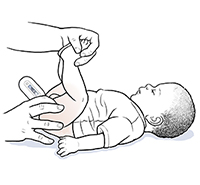
Put baby on their back on a firm surface. Hold baby’s ankles and lift both legs, as if changing a diaper.
-
Or place baby face down across your lap. Use one hand to part baby’s buttocks.
Taking the temperature
Follow the directions for using your specific digital thermometer:
-
Gently slip the tip of the thermometer into the anal opening (where stool leaves the body), no further than 1/2 inch to 1 inch.
-
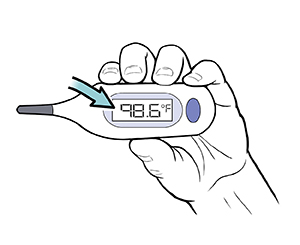
Hold the thermometer in place until it beeps. Slide the thermometer out. Read the temperature on the digital display.
-
Before putting the thermometer away, clean it with soap and warm water.
-
When you report your baby's temperature to the doctor, make sure you include that the temperature was taken rectally.
Online Medical Reviewer: Donna Freeborn PhD CNM FNP
Online Medical Reviewer: Heather Trevino
Online Medical Reviewer: Liora C Adler MD
Date Last Reviewed: 05/01/2025
© 2000-2026 The StayWell Company, LLC. All rights reserved. This information is not intended as a substitute for professional medical care. Always follow your healthcare professional's instructions.
Learn More About Health Services at PIH Health
Expert care for every stage of life. Explore the comprehensive services offered at PIH Health.
Explore Services
Get Health Tips & Updates
Sign up for helpful health information, wellness tips and news from PIH Health, delivered straight to your inbox.
SubscribeRelated Articles
Why Children Get Carsick—And What to Do
A look at why kids get carsick, with helpful tips for prevention—and what to do if it occurs.
Changing Your Baby's Diaper
Here are images showing how to change your baby's diaper.
Changing Your Newborn's Diaper
Here are images showing how to change your newborn's diaper step by step.
Stuttering in Children
Stuttering is a speech problem. The normal flow of speech is disrupted. Stuttering may make it hard for a child to communicate with others.

Personalized Care Starts with the Right Provider
Search by specialty, location, and more.
Find A Doctor
Make an Appointment
Your health can't always wait. Schedule an appointment with a PIH Health provider.
Schedule an Appointment
Find a PIH Health Urgent Care Location
Need care today?. Find the nearest PIH Health Urgent Care location.
Find Urgent Care