To eat less fat, you may need to learn some new ways to cook. But that doesn't mean you have to eat bland, boring food. And it doesn't mean cooking needs to take any more time. Here are some tips for cooking and seasoning foods with less fat.
Try new cooking methods
- Broil, roast, bake, steam, or microwave fish, chicken, turkey, and other meats.
- Remove skin from chicken and turkey and trim extra fat from meat before cooking.
- Sprinkle herbs on meat, chicken, and fish, and in soups.
- Cook in broth instead of fat.
- Use nonstick cooking sprays or nonstick pans.
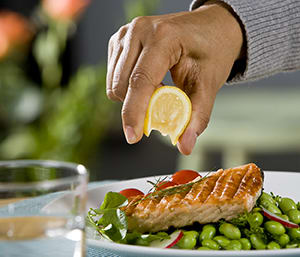
- Steam or microwave vegetables without adding fat. Serve with herbs, lemon juice, vinegar, or fat-free butter-flavored powder.
- To flavor beans and rice, add chopped onions, garlic, and peppers.
- Chill soups and stews. Before reheating and serving, skim off the fat.
- When you add fat, use canola, avocado, or olive oil instead of butter or lard.
Lighten up your recipes
- In soups and sauces: Replace whole milk or cream with low-fat milk, evaporated fat-free milk, or nonfat dry milk.
- In puddings and other desserts: Replace whole milk or cream with low-fat milk or fat-free condensed milk.
- To make dips and toppings: Use low-fat or nonfat cottage cheese, Greek yogurt, or sour cream.
- To make salad dressings: Use nonfat yogurt or low-fat buttermilk.
- In place of 1 whole egg in recipes: Use 2 egg whites or ¼ cup egg substitute.
- In place of regular cheese: Use fat-free or reduced-fat cheese.
- In place of regular peanut butter: Use peanut butter powder.
Online Medical Reviewer: Diane Horowitz MD
Online Medical Reviewer: Kenny Turley PA-C
Online Medical Reviewer: Louise Cunningham RN BSN
© 2000-2026 The StayWell Company, LLC. All rights reserved. This information is not intended as a substitute for professional medical care. Always follow your healthcare professional's instructions.
Learn More About Health Services at PIH Health
Expert care for every stage of life. Explore the comprehensive services offered at PIH Health.
Explore Services
Get Health Tips & Updates
Sign up for helpful health information, wellness tips and news from PIH Health, delivered straight to your inbox.
SubscribeRelated Articles
Low-Fiber Diet
A low-fiber diet means eating foods that don't have much fiber. They are easy to digest. Learn why your doctor may put you on this kind of diet-and what foods you can and can't eat.
Ileostomy: Nutritional Management
You don't have to eat a special diet just because you've had an ileostomy. Most foods, chewed well and eaten slowly, won't give you problems, unless they did before. But you may need to be more aware of foods that make your stool more watery than normal and foods that cause gas or odor. You also need plenty of fluids and vitamins.
Low-Salt Choices
Here are some ideas for low-salt foods you can easily prepare yourself.
Reading Food Labels
Comparing labels will help you choose foods that are low in fat, cholesterol, sodium (salt), and calories.
Personalized Care Starts with the Right Provider
Search by specialty, location, and more.
Find A Doctor
Make an Appointment
Your health can't always wait. Schedule an appointment with a PIH Health provider.
Schedule an Appointment
Find a PIH Health Urgent Care Location
Need care today?. Find the nearest PIH Health Urgent Care location.
Find Urgent Care