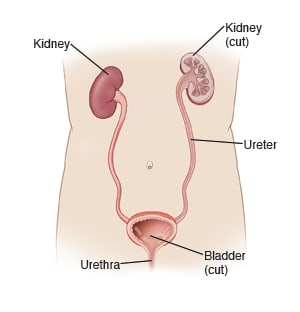
An infection in one or both kidneys is called pyelonephritis. It usually happens when bacteria get into the kidney. Rarely it is caused when other germs, such as viruses, fungi, or other disease-causing organisms, get into the kidney. The bacteria or other disease-causing organisms can enter the kidneys from the bladder or blood traveling from other parts of the body. A kidney infection can become serious. It can cause severe illness, scarring of the kidneys, or kidney failure if not treated correctly.
Common causes for this problem include:
- Not keeping the genital area clean and dry, which promotes the growth of bacteria.
- Wiping back to front. This drags bacteria from the rectum toward the urinary opening (urethra).
- Wearing tight pants or underwear. This lets moisture build up in the genital area, which helps bacteria grow.
- Holding urine in for long periods of time.
- Dehydration.
- Urinary tract infections.
- Blockages that keep urine from draining from the kidney, such as a kidney stone.
Kidney infections can cause symptoms similar to a bladder infection. Symptoms include:
- Pain or burning feeling when urinating.
- Having to urinate more often than normal.
- Blood in the urine (pink or red urine).
- Belly pain or discomfort, usually in the lower belly.
- Pain in the side or back.
- Pain above the pubic bone.
- Fever or chills.
- Vomiting.
- Loss of appetite.
Treatment is oral antibiotics. More severe cases are treated with I.M. (intramuscular) or I.V. (intravenous) antibiotics. These are started right away and may be changed once urine culture results show the infecting organisms. Treatment helps prevent a more serious kidney infection. Symptoms of kidney infections can vary based on your age.
Medicines
Medicines can help in the treatment of a bladder infection:
- Take antibiotics exactly as prescribed and until they are used up, even if you feel better. It's important to finish them to make sure the infection is gone.
- Unless another medicine was prescribed, you can use over-the-counter medicines for pain, fever, or discomfort. If you have chronic liver of kidney disease, talk with your doctor before using these medicines. Also talk with your doctor if you've ever had a stomach ulcer or digestive bleeding. Or if you are taking blood thinners.
Home care
Here are some general care guidelines:
- Stay home from work or school. Rest in bed until your fever breaks and you are feeling better, or as advised by your doctor.
- Drink lots of fluid unless you must restrict fluids for other health reasons. This will force the medicine into your urinary system and flush the bacteria out of your body. Ask your doctor how much you should drink.
- Don't have sex until you have finished all of your medicine and your symptoms are gone.
- Don't have caffeine, alcohol, or spicy foods. These foods may irritate the kidneys and bladder.
- Don't take bubble baths. Sensitivity to the chemicals in bubble baths can irritate the urethra.
- Make sure you wipe from front to back after using the toilet.
- Wear loose clothes and cotton underwear.
Prevention
These self-care steps can help prevent future infections.
- Drink plenty of fluids to prevent dehydration and flush out the bladder. Do this unless you must restrict fluids for other health reasons, or if your doctor told you not to.
- Make sure you wipe from front to back after using the toilet.
- Urinate more often. Don't try to hold urine in for a long time.
- Don't wear tight-fitting pants and underwear.
- Improve your diet to prevent constipation. Eat more fruits, vegetables, and fiber. Eat less junk and fatty foods. Constipation can make a urinary tract infection more likely. Talk with your doctor if you have trouble with bowel movements.
- Urinate right after sex to flush out the bladder.
Follow-up care
Follow up with your doctor as advised. More testing may be needed to make sure the infection has cleared. Close follow-up and more testing is very important to find the cause and to prevent future infections.
If a urine culture was done, you will be contacted if your treatment needs to be changed. If directed, you may call to find out the results.
If you had an X-ray, CT scan, or other diagnostic test, you will be told of any new findings that may affect your care.
Call 911
Call
- Trouble breathing
- Fainting or loss of consciousness
- Fast or very slow heart rate
- Weakness, dizziness, or fainting
- Trouble waking up or confusion
When to get medical care
Contact your doctor right away if any of these occur:
- A fever 100.4°F (38°C) or higher, or as advised by your doctor.
- Not feeling better or symptoms get worse 1 to 2 days after starting antibiotics
- Any new symptoms
- Any symptom that lasts after 3 days of treatment
- More pain in the stomach, back, side, or groin area
- Repeated vomiting
- Not being able to take prescribed medicine due to nausea or another reason
- Bloody, dark-colored, or bad-smelling urine
- Trouble urinating or urinating less than normal
- No urine for 8 hours, no tears when crying, confusion, sunken eyes, or dry mouth
Featured in
Online Medical Reviewer: Marc Greenstein MD
Online Medical Reviewer: Marianne Fraser MSN RN
Online Medical Reviewer: Raymond Kent Turley BSN MSN RN
Date Last Reviewed: 09/01/2025
© 2000-2026 The StayWell Company, LLC. All rights reserved. This information is not intended as a substitute for professional medical care. Always follow your healthcare professional's instructions.
Learn More About Health Services at PIH Health
Expert care for every stage of life. Explore the comprehensive services offered at PIH Health.
Explore Services
Get Health Tips & Updates
Sign up for helpful health information, wellness tips and news from PIH Health, delivered straight to your inbox.
SubscribeRelated Articles
Syphilis
Syphilis is a very serious bacterial infection. Learn about symptoms, treatment, and prevention.
Nephrotic Syndrome
Nephrotic syndrome causes scarring or damage to the filtering part of the kidneys (glomeruli). This causes too much protein to be lost from the blood into the urine.
Renal (Kidney) Insufficiency
When your kidneys don't work as they should, waste products build up in your blood. The early stage of this process is called renal insufficiency. If renal insufficiency gets worse, you can develop chronic renal failure.
Gonorrhea
Gonorrhea is a bacterial infection that is transmitted sexually. Many women and some men who have gonorrhea don't have any signs or symptoms. Here's what you should know.

Personalized Care Starts with the Right Provider
Search by specialty, location, and more.
Find A Doctor
Make an Appointment
Your health can't always wait. Schedule an appointment with a PIH Health provider.
Schedule an Appointment
Find a PIH Health Urgent Care Location
Need care today?. Find the nearest PIH Health Urgent Care location.
Find Urgent Care