Pressure injuries, also called pressure ulcers, are sores or wounds that develop due to sustained pressure on any part of the body. These are generally seen in bedridden people with chronic health conditions. But even a healthy person can begin to develop pressure injuries in less than a day if left in the same position. It helps to know where and how pressure injuries develop and what you can do to prevent them.
Unrelieved pressure
People who can’t move for long periods are at risk for pressure injuries because oxygen and other nutrients can’t easily reach their cells. It occurs due to restricted blood supply as a result of prolonged pressure on the blood vessels. This harms the skin and the underlying tissues and also increases the risk of infection in the affected area. Any person who can't move and also has fragile skin from age or disease is at even greater risk. Reduced blood supply along with aging act as a 2-pronged attack on the skin's ability to repair or heal. Some people have decreased sensation in these areas and don't feel the painful injury as it develops. Reduced pain sensation further increases the likelihood of repeated injuries.
Shear and friction
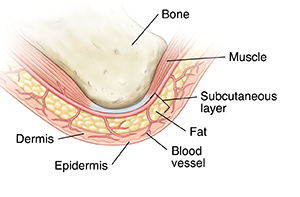
Two forces contribute to pressure injuries. Opposite, but parallel, sliding motions—like bone moving down and skin up—compress blood vessels. Surfaces rubbing (friction) can also cause skin to break down.
Put your finger on your shin and press down hard. Slide your finger up and down, allowing it to move roughly over your skin. As the skin slides over the bone, it pulls and stretches. This is called shearing. If you continue sliding your finger up and down with enough pressure in both directions it can cause the skin to tear. This is especially true in an older or sick person whose skin isn't as tough as it used to be.
Moisture buildup
Moisture or fluid buildup can increase the risk of pressure injuries. Moreover, certain kinds of fluid—sweat, urine, or feces—can provide a source for bacteria growth, delaying healing. Too much moisture may cause tissue swelling thus increasing the risk of friction.
Poor nutrition
When a person loses a lot of weight from not eating well and having poor nutrition, it makes the skin very thin, weak, and fragile. This is especially true for a person who is sick or has an injury to the skin. When cells are injured and don't get enough nutrition, the cells take longer to repair the damage.
Online Medical Reviewer: Eric Perez MD
Online Medical Reviewer: Maryann Foley RN BSN
Online Medical Reviewer: Raymond Turley Jr PA-C
Date Last Reviewed: 08/01/2024
© 2000-2026 The StayWell Company, LLC. All rights reserved. This information is not intended as a substitute for professional medical care. Always follow your healthcare professional's instructions.
Learn More About Health Services at PIH Health
Expert care for every stage of life. Explore the comprehensive services offered at PIH Health.
Explore Services
Get Health Tips & Updates
Sign up for helpful health information, wellness tips and news from PIH Health, delivered straight to your inbox.
SubscribeRelated Articles
Pressure Injury
A pressure injury is caused by lying or sitting on a bony area for long periods of time without turning. Learn how to care for a pressure injury.
Bedbug Bites
Bedbugs are tiny insects about the size of an apple seed. They feed on human blood, often at night while people are sleeping. Here's how to care for your bedbug bites.
Pressure Injuries: Common Sites
Bony prominences are the areas of bone that are close to the skin's surface. These areas are most susceptible to pressure injuries because they have the least amount of cushioning.
Venous Ulcers
Ulcers are open skin sores. Venous ulcers are leg ulcers caused by problems with blood flow in your leg veins.
Personalized Care Starts with the Right Provider
Search by specialty, location, and more.
Find A Doctor
Make an Appointment
Your health can't always wait. Schedule an appointment with a PIH Health provider.
Schedule an Appointment
Find a PIH Health Urgent Care Location
Need care today?. Find the nearest PIH Health Urgent Care location.
Find Urgent Care