Amniotic fluid surrounds your unborn baby and protects it as it grows. It also helps the baby’s muscles, lungs, and digestive tract develop the right way. Your health care provider has found that you have too much amniotic fluid in your uterus. This is called polyhydramnios. The problem is often easily managed.
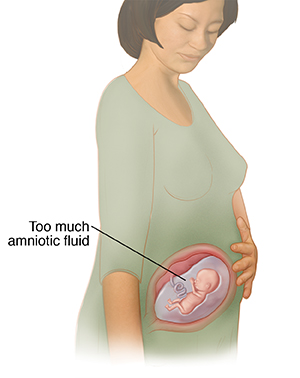
Causes of polyhydramnios
Polyhydramnios may be more common in women with diabetes or certain other health problems. A health problem in the baby may also be a cause. But in more than 5 out of 10 cases, the cause of the high fluid levels is not known.
Diagnosing polyhydramnios
An ultrasound is done to measure the amount of amniotic fluid in the uterus. It uses sound waves to make detailed images of the inside of the uterus. During the test, the amount of amniotic fluid is measured. Most often this is done using a method called amniotic fluid index.
Managing polyhydramnios
Polyhydramnios often doesn't go away on its own. Your health care provider will do regular ultrasounds to watch your amniotic fluid level. Regular prenatal care is also done to check your baby's health. In many cases, no treatment is needed. If your provider decides that treatment is needed, it may include:
-
Medicines. These help reduce the amount of fluid being made. They are rarely used beyond 32 weeks.
-
Amnioreduction. This drains excess fluid from the uterus. It is done during amniocentesis.
-
Induction of labor. This may be done if the pregnancy is at term or beyond. Your healthcare provider will tell you more, if needed.
Follow-up care
If you or your baby has a health problem that has caused the high amniotic fluid level, the problem will be treated. Sometimes an issue affecting the baby can't be treated until after birth. Your health care provider can tell you more about the cause of your high amniotic fluid level. They can also talk with you about any needed treatments.
When to contact your doctor
Contact your health care provider right away if you have any of these:
-
Fever of 100.4°F (38°C) or higher, or as directed by your provider
-
Sudden or severe belly cramping
-
Fluid leaking from the vagina
-
Regular, rhythmic contractions
-
Baby moving less than normal
Online Medical Reviewer: Irina Burd MD PhD
Online Medical Reviewer: Marianne Fraser MSN RN
Online Medical Reviewer: Tennille Dozier RN BSN RDMS
Date Last Reviewed: 02/01/2025
© 2000-2026 The StayWell Company, LLC. All rights reserved. This information is not intended as a substitute for professional medical care. Always follow your healthcare professional's instructions.
Learn More About Health Services at PIH Health
Expert care for every stage of life. Explore the comprehensive services offered at PIH Health.
Explore Services
Get Health Tips & Updates
Sign up for helpful health information, wellness tips and news from PIH Health, delivered straight to your inbox.
SubscribeRelated Articles
Back Pain During Pregnancy: Positioning Yourself
Did you know that standing, sitting, or lying in certain ways can lead to back pain? To ease pain, use positions that support your body comfortably.
Pregnancy: Your Second Trimester Changes
Even when you don’t notice it, your body is adapting to meet the needs of your growing baby. The changes in your body might also affect your moods.
First Trimester Fatigue
For many people, the extreme tiredness of the first trimester is quite a surprise. And it's an especially hard transition for those who are normally go-getters with lots of energy. Learn more about what causes this fatigue--and what to do to feel better.
Ectopic Pregnancy
With an ectopic pregnancy, the growing egg in the fallopian tube can cause the tube to burst (rupture). This can lead to severe bleeding if it is not found early and treated.

Personalized Care Starts with the Right Provider
Search by specialty, location, and more.
Find A Doctor
Make an Appointment
Your health can't always wait. Schedule an appointment with a PIH Health provider.
Schedule an Appointment
Find a PIH Health Urgent Care Location
Need care today?. Find the nearest PIH Health Urgent Care location.
Find Urgent Care