A typical pregnancy lasts, on average, 280 days, or 40 weeks—starting with the first day of the last normal menstrual period as day 1. An estimated due date can be calculated by following steps 1 through 3:
- First, determine the first day of your last menstrual period.
- Next, count back 3 calendar months from that date.
- Lastly, add 1 year and 7 days to that date.
For example: Your last menstrual period began on September 9, 2023. Counting back 3 calendar months would be June 9, 2023. Adding 1 year and 7 days would bring you to June 16, 2024, as your estimated due date.
This three-step method is referred to as Naegele's Rule and is based on a normal 28-day menstrual cycle. Therefore, dates may have to be adjusted for longer or shorter menstrual cycles.
You may also estimate your delivery date by using steps 1 and 2 below and the chart:
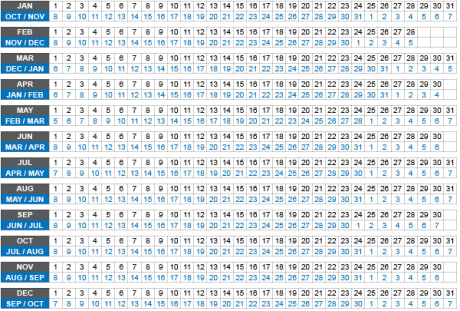
- First, locate the first day of your last menstrual period (in black text).
- Next, note the date directly below. This is your estimated date of delivery (in blue text).
Featured in
Online Medical Reviewer: Donna Freeborn PhD CNM FNP
Online Medical Reviewer: Heather M Trevino BSN RNC
Online Medical Reviewer: Irina Burd MD PhD
Date Last Reviewed: 01/01/2023
© 2000-2026 The StayWell Company, LLC. All rights reserved. This information is not intended as a substitute for professional medical care. Always follow your healthcare professional's instructions.
Learn More About Health Services at PIH Health
Expert care for every stage of life. Explore the comprehensive services offered at PIH Health.
Explore Services
Get Health Tips & Updates
Sign up for helpful health information, wellness tips and news from PIH Health, delivered straight to your inbox.
SubscribeRelated Articles
COVID-19: Pregnancy, Childbirth, and Postpartum
Researchers are still learning more about how COVID-19 affects pregnant women and their babies. Here is information to help you work with your health care team.
TOLAC (Trial of Labor After Cesarean Delivery)
You've had a cesarean section birth. Now you may wonder if you can try vaginal birth with your next baby. It's likely you can. The attempt to have a vaginal birth after cesarean delivery is called a trial of labor after cesarean delivery (TOLAC). It's often a success. To find out more about TOLAC, read this health sheet.
Labor and Childbirth: Your Body Prepares
Learn about the physical changes that often signal that your baby will soon be born.
Nutrition During Pregnancy
Not only is eating nutritious food good for you and your baby, it also can ease some of the discomforts of pregnancy. A balanced diet can help minimize symptoms, such as nausea and constipation.

Personalized Care Starts with the Right Provider
Search by specialty, location, and more.
Find A Doctor
Make an Appointment
Your health can't always wait. Schedule an appointment with a PIH Health provider.
Schedule an Appointment
Find a PIH Health Urgent Care Location
Need care today?. Find the nearest PIH Health Urgent Care location.
Find Urgent Care