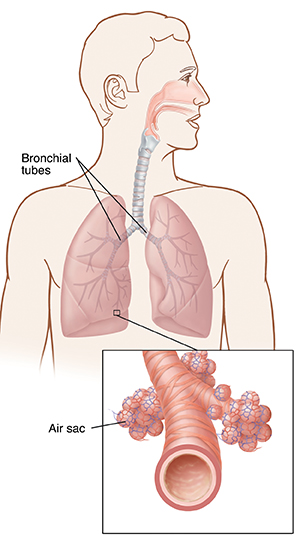
Pneumonia is an infection inside the lungs. It's in the small air sacs (alveoli). It may be caused by a virus, fungus, or bacteria. Pneumonia caused by bacteria is treated with an antibiotic medicine. Severe cases may need to be treated in the hospital. Milder cases can be treated at home. Symptoms may include fever, chills, and cough (dry or with phlegm). You may have a headache, muscle weakness, trouble breathing, and pain. These symptoms often get worse in the first 2 days. But they often start to get better in the first week of treatment.
Home care
Follow these guidelines when caring for yourself at home:
-
Get plenty of rest. Take naps as needed. Don’t let yourself get too tired when you go back to your activities. Go back to activities as directed by your healthcare provider.
-
Stop smoking. This is the most important step you can take to help treat pneumonia. If you need help to stop, talk with your healthcare provider.
-
Stay away from secondhand smoke. Don’t let anyone smoke in your home or your car.
-
Wash your hands often with soap and clean, running water. Rub for at least 20 seconds. Make sure to clean under your nails and between your fingers. When you can't wash your hands, use hand sanitizer with at least 60% alcohol.
-
Cover your mouth and nose when coughing or sneezing. Use a tissue or the inside of your elbow. Don't cough or sneeze into your hands. Throw used tissues away. Be sure to wash your hands after coughing, sneezing, or blowing your nose.
-
Limit close contact with other people while you are sick.
-
Stay away from crowds during cold and flu season. Consider wearing a mask in crowds.
-
Use pain medicine as directed. You may use acetaminophen or ibuprofen to control fever or pain, unless another medicine was prescribed. If you have chronic liver or kidney disease, talk with your healthcare provider before using these medicines. Also talk with your provider if you’ve had a stomach ulcer or bleeding in your stomach or intestines. Don’t give aspirin to a child younger than age 19 unless directed by the provider. Taking aspirin can put a child at risk for Reye syndrome. This is a rare but very serious disorder. It most often affects the brain and the liver.
-
Drink plenty of water and other fluids. This can make mucus thinner and easier to cough up. Ask your healthcare provider how much water you should drink. For many people, 6 to 8 glasses (8 ounces each) a day is a good goal. Other fluids include sport drinks, sodas without caffeine, juices, tea, or soup. If you also have heart or kidney disease, check with your provider before you drink extra fluids.
-
Eat as you are able. You may not feel hungry, so a light diet is fine. Follow the treatment plan as advised by your healthcare provider.
-
Take medicines as instructed by your healthcare provider. If you were given an antibiotic medicine, take it until it's all gone, even if you are feeling better after a few days.
-
Try to stay away from air pollution. If you live in an area with air pollution, track the Air Quality Index reports. Plan your outdoor activities when air quality is OK.
Follow-up care
Follow up with your healthcare provider in the next
Take steps to prevent future infections. Ask your healthcare provider what vaccines are right for you and when to get them. This may include the influenza (flu), COVID-19, and pneumococcal vaccines.
Call 911
Call
-
Unable to speak or swallow
-
Lips or skin looks blue, purple, or gray
-
Feeling dizzy
-
Fainting
-
Unable to be awake or aware
-
Feeling of doom
-
Trouble breathing or wheezing
-
Shortness of breath gets worse or doesn't get better with treatment
-
Rapid breathing (more than 25 breaths per minute)
-
Coughing up blood
-
Chest pain gets worse with breathing or doesn't get better with treatment
When to get medical advice
Call your healthcare provider right away if any of these occur:
-
You don’t get better in the first
2 to 3 days of treatment -
Fever of 100.4°F (38°C) or higher, or as directed by your healthcare provider
-
Shaking chills
-
Cough with phlegm that doesn't get better, or get worse
-
Shortness of breath with activities
-
Weakness, dizziness, or fainting that gets worse
-
Thirst or dry mouth that gets worse
-
Sinus pain, headache, or a stiff neck
-
Chest pain with breathing or coughing
-
Symptoms that get worse or don't get better
Online Medical Reviewer: Andrew D Schriber MD
Online Medical Reviewer: Jessica Gotwals BSN MPH
Online Medical Reviewer: Marianne Fraser MSN RN
Date Last Reviewed: 10/01/2024
© 2000-2026 The StayWell Company, LLC. All rights reserved. This information is not intended as a substitute for professional medical care. Always follow your healthcare professional's instructions.
Learn More About Health Services at PIH Health
Expert care for every stage of life. Explore the comprehensive services offered at PIH Health.
Explore Services
Get Health Tips & Updates
Sign up for helpful health information, wellness tips and news from PIH Health, delivered straight to your inbox.
SubscribeRelated Articles
Understanding Valley Fever (Coccidioidomycosis)
Valley fever is an infection caused by a fungus that's breathed in from dust in the environment. It most often causes lung infection (pneumonia). Learn about symptoms, treatment, complications, and prevention.
Understanding Zika
Zika is a virus spread through the bite of a mosquito. It may also be passed on through sexual contact and blood transfusions.
Smallpox Facts
Smallpox is an infectious disease caused by a virus similar to the one that causes chickenpox. Smallpox was eliminated from the world as a result of widespread vaccination. Read on to learn more about this disease.
When You Have COPD and Type 2 Diabetes
COPD doesn’t cause diabetes, but it can make it more difficult to control the symptoms of diabetes.

Personalized Care Starts with the Right Provider
Search by specialty, location, and more.
Find A Doctor
Make an Appointment
Your health can't always wait. Schedule an appointment with a PIH Health provider.
Schedule an Appointment
Find a PIH Health Urgent Care Location
Need care today?. Find the nearest PIH Health Urgent Care location.
Find Urgent Care