Arrhythmogenic cardiomyopathy (ARVC) is a disease of the heart muscle. ARVC is a rare genetic disease. Normal heart muscle breaks down, being replaced with fatty fibrous tissue, mainly in the right ventricle. These changes may also happen in the left ventricle. Abnormal electrical circuits in the heart muscle may develop, leading to irregular and possibly dangerous heart rhythms (arrhythmias). The heart also becomes weaker over time. This can lead to heart failure.
How to say it
Ah-RITH-moh-jehn-ihk
KAR-dee-oh-mi-AH-puh-thee
Types of treatment
ARVC is treated by a cardiologist. This is a healthcare provider who specializes in diseases of the heart.
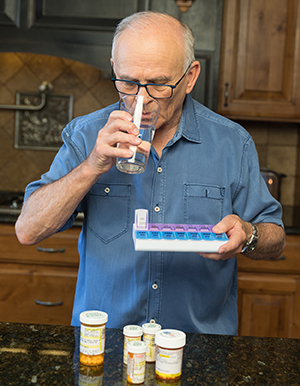
ARVC can be treated with medicines. These include:
-
Medicines to help prevent abnormal heart rhythms (anti-arrhythmics)
-
Medicines to control your heart rate, such as beta-blockers
-
Water pills (diuretics) to reduce swelling
-
Medicines to reduce the workload of the heart, like ACE inhibitors
Other possible treatments include:
-
Catheter ablation. This is a choice for some people with ARVC and abnormal heart rhythms. The healthcare provider places a thin, flexible tube (catheter) into a blood vessel and guides it into your heart. There, they use heat or cold to destroy the tissue causing the abnormal heart rhythms.
-
Implantable cardioverter defibrillator (ICD). An ICD is a small device put in your chest or below your left armpit. It uses electrical shocks to treat you if you have a dangerous heart rhythm. This can help prevent sudden death. Your healthcare provider will check your symptoms and test results to see if you need an ICD.
-
Heart transplant. In rare cases, a heart transplant may be needed if the damage to the heart is severe.
Living with ARVC
Your cardiologist may give you instructions for how to manage your ARVC. These may include:
-
Limiting heavy physical activity, including competitive sports
-
Treating any other heart conditions, such as unhealthy cholesterol levels
-
Losing excess weight
-
Quitting smoking
-
Eating a low-salt diet that’s healthy for your heart
-
Reducing the amount of alcohol and caffeine in your diet (these increase the risk for abnormal heart rhythms)
-
Keeping track of your symptoms, such as fast weight gain or swelling
When should I call my healthcare provider?
Call your healthcare provider right away if any of these occur:
-
Chest pain
-
Fainting
-
Severe trouble breathing
-
Fast weight gain
-
Swelling in your body
-
Palpitations
-
Symptoms that are getting worse
Online Medical Reviewer: Heather M Trevino BSN RNC
Online Medical Reviewer: Marianne Fraser MSN RN
Online Medical Reviewer: Rajadurai Samnishanth Researcher
Date Last Reviewed: 02/01/2025
© 2000-2026 The StayWell Company, LLC. All rights reserved. This information is not intended as a substitute for professional medical care. Always follow your healthcare professional's instructions.
Learn More About Health Services at PIH Health
Expert care for every stage of life. Explore the comprehensive services offered at PIH Health.
Explore Services
Get Health Tips & Updates
Sign up for helpful health information, wellness tips and news from PIH Health, delivered straight to your inbox.
SubscribeRelated Articles
Understanding Off-Pump Coronary Artery Bypass (CABG) Surgery
Coronary artery bypass surgery is a type of heart surgery. The surgery is done to bypass a blocked area in a coronary artery.
Risks and Complications of Angiography
Angiography is safe. But any procedure has risks and possible complications. Before you have any procedure, you should understand the possible risks. Here are the common risks for angiography.
Understanding Pericardiocentesis
Pericardiocentesis is a procedure to remove fluid that has built up in the sac around the heart. The fluid is drained with a needle and flexible tube (catheter).
Bleeding or Hematoma After Cardiac Catheterization
Here is information about the bleeding you have from the puncture site in your groin or arm from cardiac catheterization.
Personalized Care Starts with the Right Provider
Search by specialty, location, and more.
Find A Doctor
Make an Appointment
Your health can't always wait. Schedule an appointment with a PIH Health provider.
Schedule an Appointment
Find a PIH Health Urgent Care Location
Need care today?. Find the nearest PIH Health Urgent Care location.
Find Urgent Care