Plaque (a buildup in the arteries that causes narrowing) and blood clots in the coronary arteries reduce blood flow to the heart:
-
When a coronary artery narrows, less blood and oxygen flow to the heart muscle. The decreased blood flow can cause symptoms of angina. This is often felt as temporary pain or pressure in or near the chest. This can also feel like pain in the jaw, neck, and shoulder.
-
When a coronary artery narrows too much, very little blood and oxygen reach the heart muscle beyond the site of narrowing. If a clot forms, blood flow in the artery may stop. This can result in a heart attack (acute myocardial infarction). If the muscle goes without oxygen for too long, that part of the heart muscle dies.
Your whole body is at risk
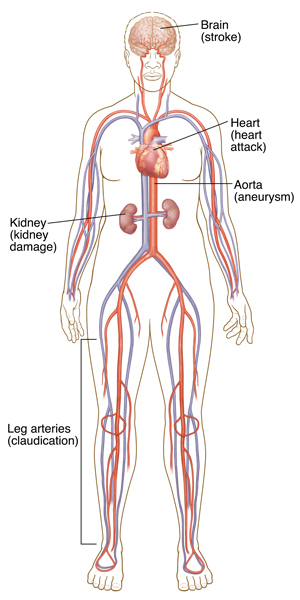
Plaque buildup in arteries can lead to problems throughout the body. Common sites of artery problems include:
-
Brain. Arteries in the brain or leading to the brain (carotid arteries) can become blocked. When this happens, blood flow to that part of the brain is reduced and that part of the brain can’t get the oxygen it needs. That portion of the brain is damaged. This leads to a stroke (ischemic stroke).
-
Kidneys. If an artery that carries blood to the kidneys is narrowed, the kidneys have a hard time filtering blood. This can lead to severe kidney damage.
-
Aorta. This is the body’s main artery. It connects directly to the heart and carries oxygenated blood from the heart to the body. If this artery wall is damaged, the weakened section of the artery can expand out like a balloon. This is called an aortic aneurysm. Over time, an aneurysm may get larger and weaker, and at risk of bursting (rupture). This can cause life-threatening bleeding.
-
Legs. If arteries in the legs are clogged and narrowed with plaque, you can have cramping or aching in the buttocks, thighs, or calves when walking. This results from less blood flow to the muscles of the legs. The pain may be relieved with rest. This pain is called claudication. It may be a symptom of peripheral artery disease.
Online Medical Reviewer: Rita Sather RN
Online Medical Reviewer: Terri Koson DNP RN ACNP
Online Medical Reviewer: Vinita Wadhawan Researcher
Date Last Reviewed: 03/01/2025
© 2000-2026 The StayWell Company, LLC. All rights reserved. This information is not intended as a substitute for professional medical care. Always follow your healthcare professional's instructions.
Learn More About Health Services at PIH Health
Expert care for every stage of life. Explore the comprehensive services offered at PIH Health.
Explore Services
Get Health Tips & Updates
Sign up for helpful health information, wellness tips and news from PIH Health, delivered straight to your inbox.
SubscribeRelated Articles
Possible Causes of Dizziness or Fainting
Dizziness and fainting can have many causes. Here are some examples of possible causes your healthcare provider will look to rule out.
Causes of Syncope
Syncope (fainting) has many causes. Sometimes it's not serious. In other cases, it's a sign of a heart problem. Read on to learn more.
Pericardial Effusion
Pericardial effusion is the buildup of extra fluid in the space around the heart. If too much fluid builds up, it can put pressure on the heart. This can prevent it from pumping normally.
High Cholesterol: Assessing Your Health Risks
The higher your blood cholesterol, the greater your risk for heart attack or stroke. That's why you need to know your cholesterol level.
Personalized Care Starts with the Right Provider
Search by specialty, location, and more.
Find A Doctor
Make an Appointment
Your health can't always wait. Schedule an appointment with a PIH Health provider.
Schedule an Appointment
Find a PIH Health Urgent Care Location
Need care today?. Find the nearest PIH Health Urgent Care location.
Find Urgent Care