Gastroesophageal reflux (GER) is when gas or liquid from the stomach comes up the esophagus. All babies have reflux from time to time. It can cause babies to have wet burps after feedings. Babies may also have spit-ups, which are a gentle return of milk or stomach contents to the esophagus and mouth. This is because in babies the muscle that opens and closes the top of the stomach is very relaxed. It opens easily. Gas and fluid tend to escape.
Babies with severe reflux have gastroesophageal reflux disease (GERD).
What are the symptoms of GERD?
A baby with GERD may spit up too much. They may not get enough nourishment from food. A baby can also aspirate (breathe in) spit-up liquid. This can cause problems with your baby’s breathing. Common symptoms include:
-
Lots of crying
-
Very irritable
-
Increase in frequency or intensity of spit-up
-
Trouble feeding or refusal to feed
-
Poor weight gain or weight loss
-
Malnutrition
-
Trouble swallowing
-
Arching of the back during feedings
-
Sleep problems
-
Respiratory symptoms such as coughing or wheezing
-
Swollen, distended, or hard-feeling belly
How is GERD diagnosed?
In most cases, GERD is diagnosed by reviewing your baby's symptoms, feeding patterns, and health history. Your child's healthcare provider may also check your child's growth by plotting their weight and height on a growth chart. In some cases, tests may be needed to find the cause of your child’s symptoms. Common tests for GERD include:
-
Upper GI series. This test is also called a barium swallow. Barium is a thick, chalky liquid. When swallowed, it makes the esophagus and stomach show up on X-rays.
-
Endoscopy. Your baby is given a medicine (anesthesia) to make them fall asleep. Then a tube (endoscope) with a light and a tiny video camera on it is put down your child’s throat. This lets the provider look at your child’s esophagus and stomach.
-
A 24-hour esophageal pH study. The provider puts a very thin tube into your child’s esophagus. This tube is connected to a monitor that records acid levels and reflux activity for a day or longer.
How is GERD treated?
-
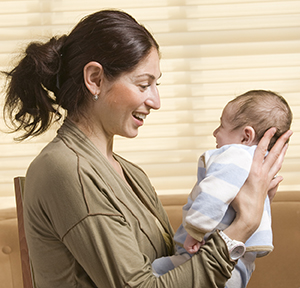
Feeding changes. You may need to feed smaller amounts more often. You may need to burp your baby more often during feedings. Letting more time pass between feedings may help. Your child’s healthcare provider may advise adding cereal to formula or stored breast milk to make it thicker. Don’t change your baby’s food unless their healthcare provider tells you to do so.
-
Diet changes. To rule out milk protein allergy, your baby may need to start a trial of cow's milk protein-free diet for several weeks. If your baby is fed with formula, you may need to give your baby a special formula. If your baby is breastfed, the mother may be advised to change their diet so they don't have cow’s milk protein.
-
Positioning therapy. Keep your baby upright after feeding. For
20 to 30 minutes after feeding, place your baby so that their head is higher than their stomach. Do this by carrying your baby in an upright position. For example, put the baby over your shoulder. Don't place your baby in a baby carrier or car seat. When it’s time for sleep, put your baby on their back on a flat, firm, non-inclined surface. This is to help prevent SIDS (sudden infant death syndrome). -
Medicines. These may include medicines to lower the amount of acid in the stomach.
-
Surgery. In severe cases, surgery may be done. It makes the valve at the top of the stomach stronger. It does this by wrapping part of the stomach around the esophagus.
What are the long-term effects?
In most cases, reflux gets better over time and causes no long-term problems.
Featured in
Online Medical Reviewer: Dan Brennan MD
Online Medical Reviewer: Stacey Wojcik MBA BSN RN
Online Medical Reviewer: Vinita Wadhawan Researcher
Date Last Reviewed: 10/01/2024
© 2000-2026 The StayWell Company, LLC. All rights reserved. This information is not intended as a substitute for professional medical care. Always follow your healthcare professional's instructions.
Learn More About Health Services at PIH Health
Expert care for every stage of life. Explore the comprehensive services offered at PIH Health.
Explore Services
Get Health Tips & Updates
Sign up for helpful health information, wellness tips and news from PIH Health, delivered straight to your inbox.
SubscribeRelated Articles
When Your Child Has Constipation
Constipation is a common problem in children. Your child has constipation if their poop is hard and dry. This often leads to straining or trouble pooping. Read on to learn more about symptoms and treatment.
Dysphagia (Child)
Dysphagia is trouble swallowing. This means your child may choke when eating or drinking.
When Your Child Has Diarrhea
Diarrhea is one of the most common illnesses in children. It can lead to too much fluid loss (dehydration) which can be serious. So preventing dehydration is important in managing your child's diarrhea. Here's what you need to know.
Food Poisoning (Infant/Toddler)
Dehydration is the main concern when a child has food poisoning. This sheet can help you care for your sick child at home.

Personalized Care Starts with the Right Provider
Search by specialty, location, and more.
Find A Doctor
Make an Appointment
Your health can't always wait. Schedule an appointment with a PIH Health provider.
Schedule an Appointment
Find a PIH Health Urgent Care Location
Need care today?. Find the nearest PIH Health Urgent Care location.
Find Urgent Care