If you often have a painful, burning feeling in your chest after you eat, you may have gastroesophageal reflux disease (GERD). Heartburn that keeps coming back is a classic symptom of GERD. But you may have other symptoms as well. A GERD diagnosis is made only after a complete evaluation by your health care provider.
Important
Chest pain may also be caused by heart problems. Be sure to have all chest pain checked by a health care provider.
When you have a reflux problem
After you eat, food travels from your mouth down the esophagus to your stomach. Along the way, food passes through a one-way valve called the lower esophageal sphincter (LES). The LES sits at the opening to your stomach. Normally the LES opens when you swallow. It lets food enter the stomach, then closes quickly. With GERD, the LES doesn’t work normally. It lets food and stomach acid flow back (reflux) into the esophagus. This creates the burning sensation.
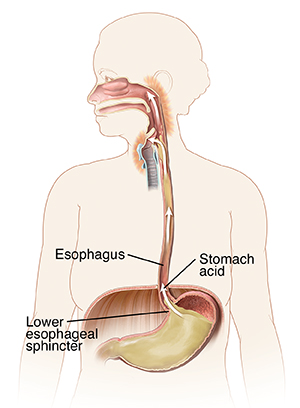
Some common symptoms
Common symptoms of GERD include:
-
Frequent heartburn.
-
Frequent burping.
-
Sour- or acid-tasting fluid backing up into your mouth.
-
Symptoms that get worse after you eat, bend over, or lie down.
-
Trouble swallowing or pain when swallowing.
-
A dry, long-term (chronic) cough, hoarseness.
-
Upset stomach (nausea). Nausea and vomiting may be a sign of something else, so be sure to discuss with your health care provider.
Relieving your discomfort
You and your health care provider can work together to find the treatment choices to best ease your symptoms. These may include lifestyle changes, medicine, or possibly surgery.
Many people find their GERD symptoms decrease when they eat small frequent meals instead of 3 large ones. Reducing the amount of fatty, spicy, and acidic foods in your diet will also help.
Foods that tend to cause problems for people diagnosed with GERD include:
-
Tomatoes and tomato products.
-
Alcohol.
-
Coffee.
-
Peppermint.
-
Greasy or spicy foods.
-
Acidic foods, such as citrus.
To ease your symptoms, raise the head of your bed 4 to 6 inches. Don't eat anything within 2 to 3 hours of lying down.
If you are at a higher weight, losing weight will often ease GERD symptoms.
Stopping smoking may also help alleviate GERD symptoms.
Talk with your provider if you don’t understand how to make the dietary changes needed to control your GERD symptoms. Your provider can refer you to a nutritionist or recommend certain medicines to reduce the acid buildup.
Online Medical Reviewer: Jen Lehrer MD
Online Medical Reviewer: Rita Sather RN
Online Medical Reviewer: Robyn Zercher FNP
Date Last Reviewed: 01/01/2025
© 2000-2026 The StayWell Company, LLC. All rights reserved. This information is not intended as a substitute for professional medical care. Always follow your healthcare professional's instructions.
Learn More About Health Services at PIH Health
Expert care for every stage of life. Explore the comprehensive services offered at PIH Health.
Explore Services
Get Health Tips & Updates
Sign up for helpful health information, wellness tips and news from PIH Health, delivered straight to your inbox.
SubscribeRelated Articles
Anatomy of the Anus
The anus is the last part of the digestive tract. Learn more about its anatomy, including where anal cancer is likely to start.
Stomach Cancer: Stages
Learn what the different stages of stomach cancer mean.
The Digestive Process: Digestion Begins in the Mouth
Digestion is a multistep process that begins the moment you place a piece of food in your mouth or sip some juice.
Discharge Instructions for Chronic Pancreatitis
You've been diagnosed with long-term (chronic) pancreatitis. This is caused by repeated cases of inflammation of your pancreas. Learn how to care for yourself at home.
Personalized Care Starts with the Right Provider
Search by specialty, location, and more.
Find A Doctor
Make an Appointment
Your health can't always wait. Schedule an appointment with a PIH Health provider.
Schedule an Appointment
Find a PIH Health Urgent Care Location
Need care today?. Find the nearest PIH Health Urgent Care location.
Find Urgent Care