What is DCIS?
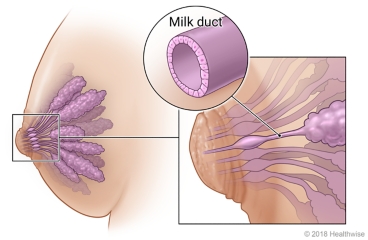
Ductal carcinoma in situ (DCIS) is the growth of abnormal cells in the milk ducts of the breast. It's an
early form of noninvasive breast cancer. Noninvasive means that the cells haven't spread. Some cases of DCIS
will become invasive breast cancer, but it's impossible to know which ones.
What causes it?
The exact cause of DCIS isn't known. Age and family health history may play a part.
What are the symptoms?
Most of the time, DCIS doesn't cause symptoms. But in some cases, symptoms can include a lump in the breast
or fluid or blood coming from the nipple.
How is it diagnosed?
DCIS is usually seen as small bits of calcium (microcalcifications) on a mammogram. To diagnose DCIS, your
doctor will remove a sample of breast tissue and look at it under a microscope. This is called a breast
biopsy.
How is it treated?
Treatment for DCIS is based on the grade and location of the cancer and other things, such as your overall
health and what matters to you. The main treatment is:
- Surgery.
- The choices are:
-
Breast-conserving surgery. This removes just the cancer and a border of healthy tissue around it.
-
Mastectomy. This removes the whole breast. Nearby tissue may also be removed and checked for cancer
cells.
-
Other treatments may include:
- Radiation therapy.
- This uses high-dose X-rays to destroy cancer cells and shrink tumors. Radiation may be given after
surgery. - Endocrine therapy.
- These medicines block hormones that cause certain cancers to grow. This helps slow or stop cancer growth.
Clinical trials are being done to find out if active surveillance may be an option for some people with DCIS.
Your doctor will talk with you about your options and then make a treatment plan.
Follow-up care is a key part of your treatment and safety. Be sure to make and go to all
appointments, and call your doctor if you are having problems. It's also a good idea to know your test results
and keep a list of the medicines you take.
Current as of: October 25, 2023
Content Version: 14.0
Care instructions adapted under license by your
healthcare professional. If you have questions about a medical condition or this instruction, always ask
your healthcare professional. Healthwise, Incorporated disclaims any warranty or liability for your use of
this information.
Featured in

Learn More About Health Services at PIH Health
Expert care for every stage of life. Explore the comprehensive services offered at PIH Health.
Explore Services
Get Health Tips & Updates
Sign up for helpful health information, wellness tips and news from PIH Health, delivered straight to your inbox.
SubscribeRelated Articles
What Are Fibrocystic Breasts?
If your breasts ever feel lumpy, sore, or tender, you may have fibrocystic breasts. This is a very common condition. Here's what you need to know about it.
Peutz-Jeghers Syndrome and Cancer
People with this syndrome have dark moles around the mouth, nose, and eyes, as well as multiple polyps in the intestines.
Birth Control Methods
Birth control methods are used to help prevent pregnancy. There are many different methods to choose from. Read on to learn more.
Pap Test
For 48 hours before the test, do not douche, use vaginal medicines or creams. For 24 hours before, do not have sexual intercourse.

Personalized Care Starts with the Right Provider
Search by specialty, location, and more.
Find A Doctor
Make an Appointment
Your health can't always wait. Schedule an appointment with a PIH Health provider.
Schedule an Appointment
Find a PIH Health Urgent Care Location
Need care today?. Find the nearest PIH Health Urgent Care location.
Find Urgent Care