Your loved one may need ongoing therapy or nursing care after a stroke. Talk with a social worker or case manager. They can help with planning for care. They can tell you about local sources of support.
Planning for home care
-
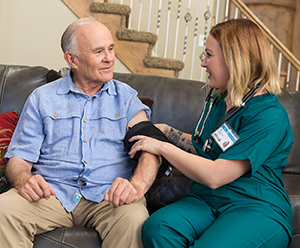
A nurse may come and check their blood pressure.
-
A physical therapist may help with exercises. The therapist will often show your loved one and their family members certain exercises that can be done without supervision.
-
Speech and occupational therapists can help the whole family communicate and handle tasks of daily living better.
Adult daycare
You may be afraid to leave your loved one alone. Adult daycare facilities can provide supervision if you need time away during the day. They also give your loved one a chance to be with other people.
Other resources
You can also check the internet for other resources. Try the following listings:
-
Churches and synagogues
-
Recreation centers
-
Adult daycare
-
Social services
-
Support groups
-
Online stroke support communities
Online Medical Reviewer: Anne Fetterman RN BSN
Online Medical Reviewer: Deepak Sudheendra MD
Online Medical Reviewer: Raymond Kent Turley BSN MSN RN
Date Last Reviewed: 06/01/2025
© 2000-2026 The StayWell Company, LLC. All rights reserved. This information is not intended as a substitute for professional medical care. Always follow your healthcare professional's instructions.
Learn More About Health Services at PIH Health
Expert care for every stage of life. Explore the comprehensive services offered at PIH Health.
Explore Services
Get Health Tips & Updates
Sign up for helpful health information, wellness tips and news from PIH Health, delivered straight to your inbox.
SubscribeRelated Articles
Thrombolytic Therapy for Stroke
An ischemic stroke occurs when blood flow to the brain is blocked. This is most often due to a blood clot in an artery in the brain or an artery leading to the brain. Treatment is needed right away to help dissolve the clot and restore normal blood flow.
For Caregivers: Regaining Movement After Stroke
After a stroke, a person may have trouble using all or part of the body. Improving posture, range of motion, and strength are early goals.
Larynx-Lifting Exercises for Dysphagia
Larynx-lifting exercises can help you swallow better. You may need these exercises if you have trouble swallowing (dysphagia).
For Caregivers: Swallowing Problems After Stroke
Some people have trouble swallowing (dysphagia) after a stroke. This makes choking more likely. It also puts their health at more risk for conditions like aspiration pneumonia. To make sure your loved one gets the nutrition they need, a speech therapist may teach them ways to improve swallowing.

Personalized Care Starts with the Right Provider
Search by specialty, location, and more.
Find A Doctor
Make an Appointment
Your health can't always wait. Schedule an appointment with a PIH Health provider.
Schedule an Appointment
Find a PIH Health Urgent Care Location
Need care today?. Find the nearest PIH Health Urgent Care location.
Find Urgent Care